
I once recorded my finances using the back of a shopping receipt. It worked for about three days. Then the receipt went through the wash, along with my “budget.”
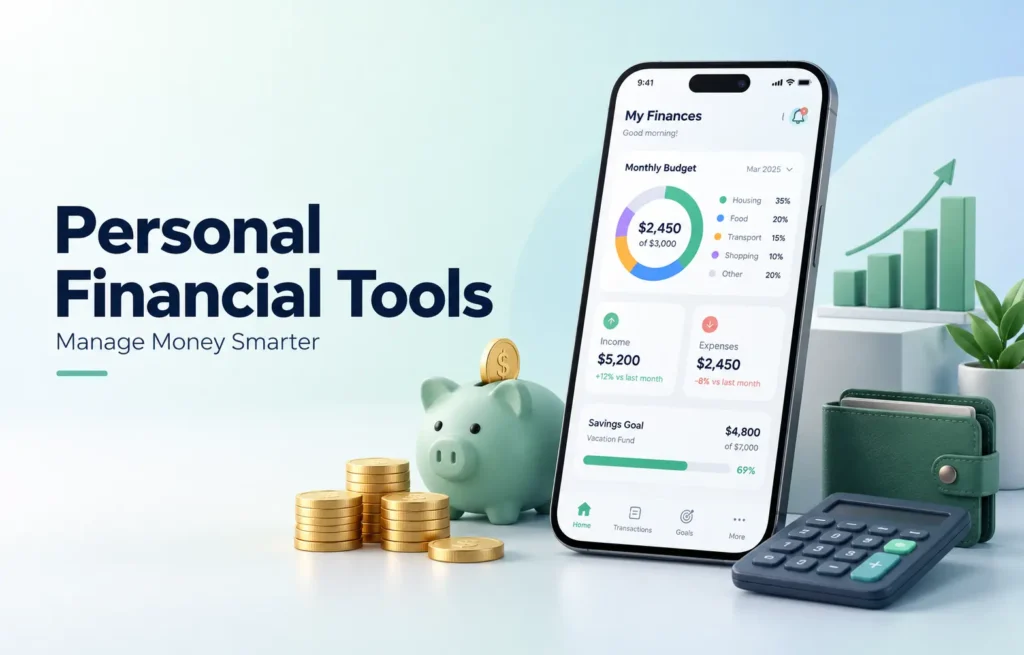
Now, you know what I mean, don’t you? Most of us aren’t bad with money. We just don’t have a system. The right personal financial tools can be that system, and they take a lot of the stress out of the process.
Why Personal Financial Tools Actually Help
Your brain is great at big-picture thinking. It’s not great at remembering 30 small expenses from last week.
Good tools handle the boring parts: tracking, calculating, and reminding. You get to focus on decisions. That’s the entire purpose.
Budgeting Tips for Beginners
Start simple. Don’t build a color-coded spreadsheet with 14 tabs. You’ll quit by Friday.
Here’s what usually works:
- Record everything for a month. Just keep track, no criticisms.
- Allocate your earnings into three buckets: needs, wants, and savings.
- Do an analysis weekly. Ten minutes is plenty.
Best Budgeting Tools to Try
The best budgeting tools are those that will easily find its place in your everyday life. You can have fun using the budgeting software which is integrated with your bank accounts or just work with the plain Google Sheets. Both ways are good.
Also read: 10 Smart Personal Finance Tips Every Young Professional Must Know in India (2026 Guide)
An online budget calculator is a great place to start. Just enter your income and expenditures, and check how much money you have left. The entire process will take you just a few minutes.
Intelligent Methods of Saving without Feeling Broke
Saving shouldn’t feel like punishment. A few smart ways to save money that I’ve seen work:
- Automate. Send an automatic small amount of money directly into your savings on your payday.
- Give every goal a name. “Emergency fund” motivates more than “savings.”
- Cancel one subscription you forgot about. Almost everyone has one.
Small habits add up faster than you’d think.
Investment Tips for Getting Started
Once you have a basic cushion, it’s time to think about investments. Don’t let the jargon scare you.
A few investment tips worth remembering:
- Start small. You don’t need a lot of money to begin.
- Be patient. Time in the market usually matters more than timing the market.
- Spread your money around. Putting everything in one place is risky.
- Know your goal. Saving to buy a house within five years is far different from saving for retirement in thirty years’ time.
You may use simple calculators to project your growth with the benefit of consistent contributions. Just remember that returns aren’t guaranteed. If you’re unsure, a licensed financial advisor can help.
Personal Finance Tips to Keep You Consistent
Tools don’t fix habits. They support them. Choose one, try it for a month, and then change. It’s as simple as going to the gym – the equipment helps, but still you yourself need to do the work.
Final Thoughts
Managing finances will become easy once you stop fussing over every minute detail and begin using the right tools. Be consistent in your actions and don’t expect perfection from yourself. That’s the real secret to using personal financial tools well, and it’s what we built iBankify to support, from your first budget to your first investments.
Ready to Simplify Your Money?
Stop guessing and start tracking. Stay updated with iBankify and begin your journey toward a stress-free money management process.
FAQs
What tools can I use for personal finance?
You can begin with a budgeting tool or budget calculator online. Later on, use a tracking tool for investments after getting comfortable with basic things. iBankify provides all of these tools in one single app rather than having to use five different apps.
How much money should I save each month?
Most people try to save about 20% of their income, but even 5% would be a great beginning.
Should I use paid tools?
Mostly, no. The need for paid tools arises only when it helps you save time or effort.