
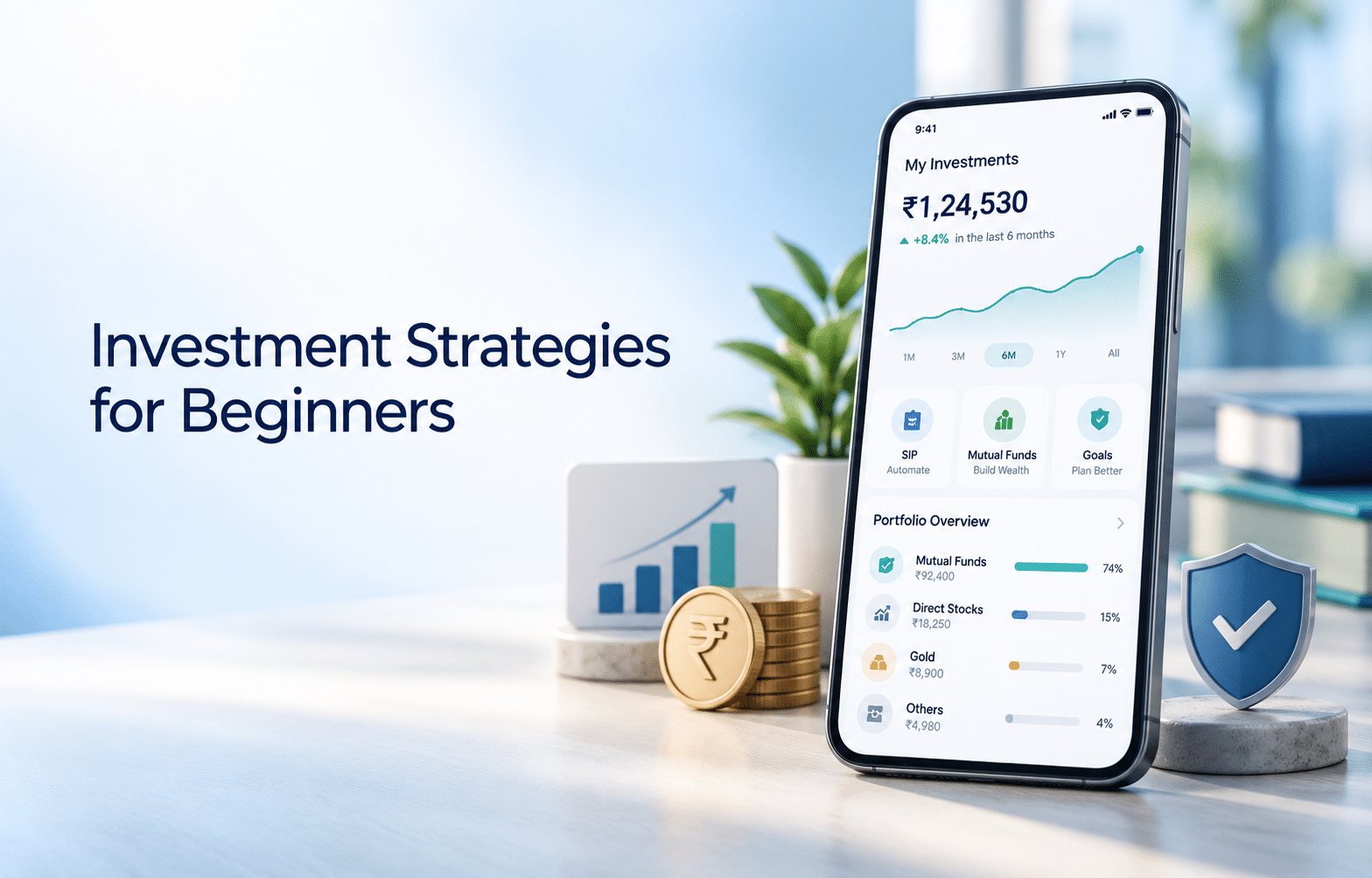
A friend of mine once kept ₹50,000 idle in his savings account for almost two years. His reason? “I want to learn everything about investing first.” By the time he felt ready, he had missed a solid market run. The truth is, you don’t need to know everything. You just need a plan and a first step. These investment strategies for beginners will help you get there.
How to Invest for the First Time
Prepare yourself before you choose anything.
- Save an emergency corpus. Set aside money equivalent to 3 to 6 months of expenses.
- Have a goal. Buying a bike within one year or retiring in 25 years will require a different approach.
- Understand your comfort. If 10% losses keep you up at night, be careful.
Low-Risk Investments for Beginners
If you’re nervous, that’s normal. Fixed deposits, PPF, and debt mutual funds are steady options. The returns won’t make headlines, but your money stays relatively safe. Think of these as your foundation.
Best Mutual Funds for Beginners
Mutual funds are a popular starting point because professionals manage your money across many stocks.
Index funds
They simply track the market, like the Nifty 50. Costs are low and they’re easy to understand.
Hybrid funds
These mix equity and debt, so the ride is a little smoother.
You can invest in mutual funds online in about ten minutes once your KYC is done. Check the fund’s expense ratio and long-term track record before you pick one.
Start a SIP Investment Online
A SIP lets you invest a fixed amount every month, even ₹500. You don’t have to time the market, and the habit builds itself. Honestly, this is the easiest way to begin.
Buy Stocks Online for Beginners
Stocks can grow your wealth faster, but they’re also more unpredictable. If you want to buy stocks online as a beginner, keep it simple:
- Open a demat account.
- Start with companies you actually understand.
- Invest small amounts at first.
- Never put in money you’ll need within a year.
Short-Term vs Long-Term: What’s the Difference?
Short-term investment options
For objectives up to three years, invest in only liquid schemes or recurring deposits. The element of safety takes precedence over profits.
Long-term investment strategies
For objectives which lie beyond five years, equity schemes will prove to be most suitable. Time evens everything out. Be regular, don’t panic sell, and evaluate your portfolio once in a year.
Also read: TIPS FOR INVESTING IN SIP
Compare Investment Plans Online Before You Commit
Don’t grab the first plan someone recommends. Take a little time to compare investment plans online. Look at returns over several years, fees, the lock-in period, and the risk level. Here’s a quick side-by-side to get you started:
| Option | Risk Level | Best For | Ideal Time Frame | Liquidity |
| Fixed Deposit (FD) | Low | Safe, predictable growth | 1–5 years | Moderate (penalty on early exit) |
| PPF | Low | Tax-saving, retirement | 15 years | Low (long lock-in) |
| Debt Mutual Funds | Low to Moderate | Short-term goals | 1–3 years | High |
| Index Funds | Moderate to High | Long-term wealth building | 5+ years | High |
| Hybrid Funds | Moderate | Balanced growth, smoother ride | 3–5 years | High |
| Direct Stocks | High | Experienced or patient investors | 5+ years | High |
Risk and returns vary by fund and market conditions. Always check the latest details before investing.
Final Thoughts
Investment is not all about having money and being an expert. It is about getting started, being patient, and making use of experience. Choose an objective, start small with SIP, keep a part of funds in safer investments, and give time the work to do. When you are in search of a perfect place to make comparisons and start from scratch, iBankify becomes the perfect partner for your investment techniques as a novice.
Frequently Asked Questions
What is the best way to invest for the first time?
Invest in small amounts. Create an emergency fund first, and then start SIPs in index or hybrid funds. It is easy and avoids the stress of market timing.
How much money do I need to start investing?
Less than you think. There are plenty of mutual funds that allow you to start SIPs with as low as ₹500 monthly contributions.
Are mutual funds safe for a beginner investor?
These funds are not guaranteed, but they are a prudent choice as the risks are diversified. Debt and hybrid funds are less risky than equity funds.
Should I opt for short-term or long-term investments?
Depends on your goal. If you require the funds in the next three years, opt for shorter-term investment plans. If you have a longer horizon, equity-based plans should give you better gains.
Can I trade in stocks online even if I have no experience?
Yes, you just need a demat and trading account. Start with small amounts and stocks that you can understand, and learn from there.
How do I compare investment plans online?
Consider past performance, expense ratio, lock-in period and risk. Don’t pick any plan on the basis of one year’s performance.
🚀 Ready to Take Your First Step?
Don’t wait for the “perfect time.” Start your journey with iBankify today. Compare plans, explore mutual funds, and start a SIP in just a few minutes.